

Why More Connected Doesn't Mean Less Lonely
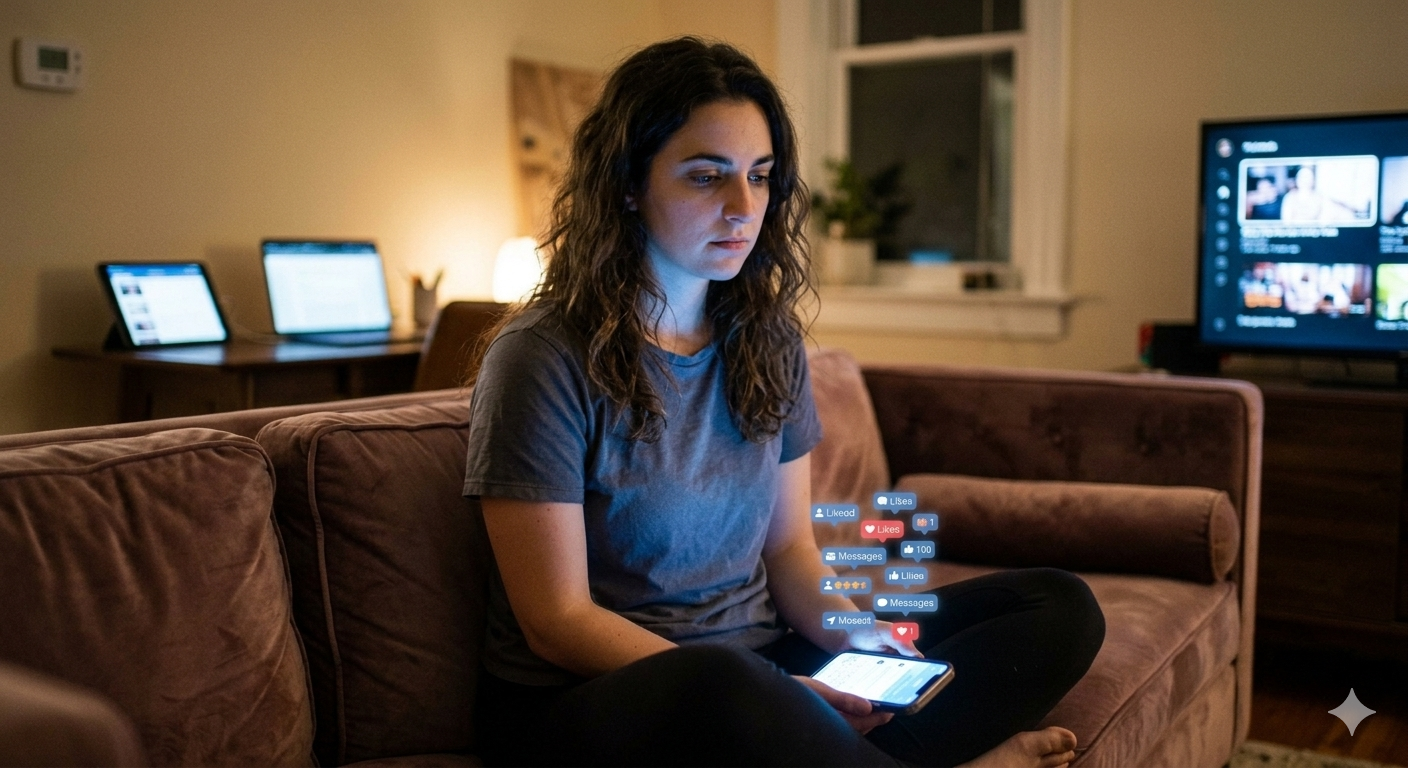
It's a strange feature of modern life: it has never been easier to be in constant contact with other people, and loneliness has never been more widely reported. Surveys over the past decade have consistently found high rates of chronic loneliness, especially among younger adults who are also the most digitally connected generation in history. Understanding why constant connection hasn't solved loneliness, and in some ways has complicated it, is worth taking seriously rather than dismissing as an inevitable cost of modern life.
Why Digital Contact Isn't the Same as Connection
Loneliness isn't primarily about the frequency of contact with other people; it's about the depth and quality of that contact. A hundred likes on a post or a running group chat can provide a sense of activity and audience without providing the specific ingredients that actually reduce loneliness: being truly known, feeling emotionally understood, and experiencing mutual vulnerability. Much of digital interaction is curated and low-stakes by design, which makes it easier and more frequent, but also less likely to meet the deeper relational needs that in-person, sustained relationships tend to meet.
How Digital Connection Can Actually Deepen Loneliness
For some people, heavy reliance on digital connection doesn't just fail to reduce loneliness, it actively contributes to it, through mechanisms including:
• Social comparison, where curated online presentations of other people's lives and relationships amplify feelings of being left out or falling short
• Reduced tolerance for the friction of in-person relationships, as low-effort digital interaction becomes the default and higher-effort connection feels harder by comparison
• Passive consumption, scrolling through others' lives rather than actively engaging, which research links to loneliness more strongly than active social media use
• Substitution rather than supplementation, where digital contact gradually replaces in-person relationships rather than adding to them
• Fragmented attention across many surface-level connections rather than depth in a smaller number of significant relationships
What Actually Reduces Loneliness
Research on loneliness interventions consistently points toward a few key factors, none of which require abandoning technology altogether:
• Consistent, low-barrier contact with the same people over time, which builds the kind of familiarity that fosters real connection
• Shared activities and shared physical presence, which create connection almost as a byproduct rather than the explicit goal
• Active rather than passive social media use, engaging in conversation rather than scrolling
• Vulnerability and self-disclosure within relationships, which digital interaction often makes easier to avoid
• Addressing underlying anxiety, depression, or social skills challenges that can make in-person connection feel harder to initiate or sustain
Frequently Asked Questions
Is it possible to be lonely even with a large social media following or active online community?
Yes, and this is actually a common experience. A large digital audience doesn't necessarily provide the depth, mutual vulnerability, or sustained attention that reduces loneliness. Some of the loneliest people have the most digital contacts.
Should I just quit social media to fix loneliness?
Not necessarily. Research suggests it's less about total usage and more about how you use it: passive scrolling tends to correlate with increased loneliness, while active engagement, messaging friends directly, participating in genuine conversation, tends to be more neutral or even helpful. The goal is usually recalibrating use, not eliminating it entirely.
When does loneliness become something to address in therapy?
If loneliness has become persistent, is affecting your mood or motivation, or is tied to anxiety or depression that makes initiating connection feel especially difficult, therapy can help address both the emotional impact and the patterns that may be maintaining the isolation.
Related Reading
• Highly Sensitive Person: Understanding Sensory Processing Sensitivity
• Self-Care for Couples: Nurturing Your Individual and Shared Well-Being
If you've been feeling isolated despite being constantly connected, that disconnect is real and worth taking seriously. Radiant Recovery and Counseling offers therapy for loneliness and social connection challenges across Minnesota, in person and via telehealth.
Schedule a consultation: 612-429-1662 | info@rrcs.cc | https://www.radiantrecoveryandcounseling.com/book