

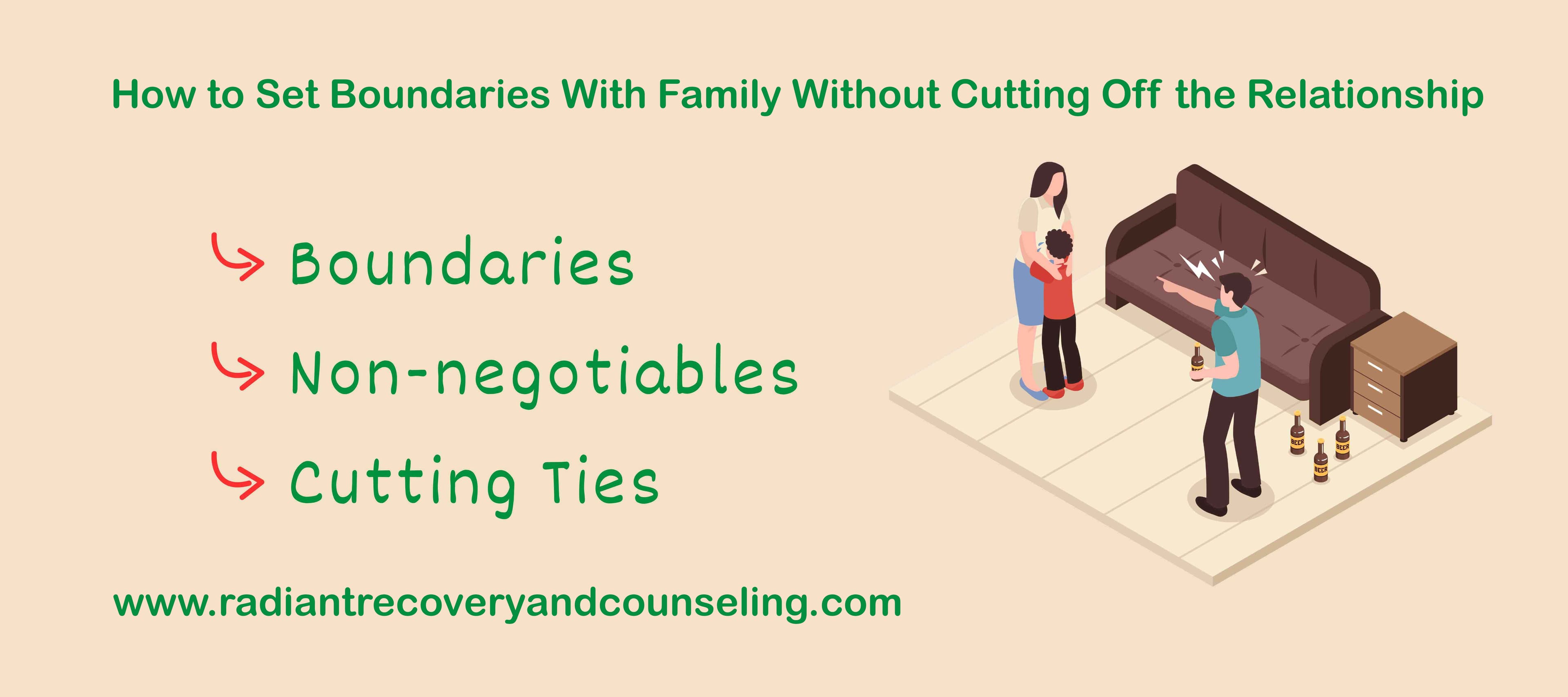
Setting a boundary with family can feel complicated. You may care about the relationship and still need more privacy, less criticism, or fewer last-minute demands. You may also worry that saying no will be interpreted as rejection. A boundary is not a way to control another person. It is a way to be clear about what you can do and what you will do if a situation continues.
There is no single script that works for every family. Culture, age, caregiving responsibilities, finances, safety, and past experiences all shape what feels possible. Start with one specific situation rather than trying to solve every family disagreement at once.
Identify what you need to change
Before speaking with a relative, describe the problem in observable terms. For example, “I get repeated calls during my workday,” is more specific than “My family never respects me.” Then consider what would help: a time when you can return calls, a limit on visits, a change in how a difficult topic is discussed, or a clear division of caregiving tasks.
Ask yourself what part is within your control. You cannot make another person agree with your limit, but you can decide whether to answer a call, how long to stay, or whether to pause a conversation that becomes hurtful.
Keep the message clear and specific
A boundary does not have to be a long argument. You might say:
•“I can talk after work, but I can’t take calls during meetings.”
•“I’m not discussing my relationship at dinner. If it comes up, I’m going to change the subject or step away.”
•“I can help with the appointment on Tuesdays. I’m not available every day.”
Use words that feel natural to you. It can help to acknowledge the relationship while stating the limit: “I care about staying connected, and I need us to speak without insults.” Avoid making a threat you do not intend to follow through on.
Expect that the other person may need time
A family member may respond with confusion, disappointment, or anger. Their reaction does not automatically mean your limit is wrong, but it may tell you that more discussion is needed. You can repeat the boundary calmly rather than defending it in a long debate.
A boundary works through your own action. If you have said you will end a conversation when yelling starts, you may need to end the call or leave the room when it happens. Choose a response you can carry out safely and consistently.
Make room for values and practical realities
Boundaries are not one-size-fits-all. Some people want frequent family contact; others need distance. In close-knit or interdependent families, a limit may need to account for shared responsibilities and mutual support. You can value connection and still talk about what is sustainable.
If you depend on a relative for housing, money, transportation, or care, consider the practical risks before making a major change. A therapist or trusted support person can help you think through options and plan a conversation. If you fear retaliation or feel unsafe, prioritize safety and seek appropriate help rather than relying on a direct confrontation.
When family conflict keeps repeating
If the same argument returns despite your attempts to communicate, it may help to look at the pattern: what tends to trigger it, how each person responds, and what happens afterward. Individual or family therapy can provide a structured setting to explore communication, roles, and options. Family participation should be considered carefully when there are significant safety concerns.
Radiant Recovery & Counseling offers mental health care in Minnesota and Georgia. You can explore the practice’s specialties and family therapy information, then contact the team to ask what services and clinicians are currently available for your needs.
Setting a boundary may feel uncomfortable at first, especially if your family is used to a different pattern. You do not have to get every word perfect. Aim for a clear, respectful limit that protects what matters and leaves room for a healthier conversation when that is possible.
Suggested internal links: family therapy; relationship issues specialty; effective communication in relationships; contact/book.