Chronic Stress and Physical Health: What St Paul Residents Should Know
Chronic stress is defined as a prolonged activation of the body's stress response system, distinct from acute stress, which resolves once a specific stressor passes. While acute stress is a normal and even useful part of daily life, chronic stress keeps the body in a sustained state of alert, with measurable effects on physical health over time.
How the Body Responds to Ongoing Stress
When the brain perceives a threat, real or ongoing, it triggers the release of cortisol and adrenaline, hormones designed to prepare the body for short term action. This response is helpful in brief doses. Sustained over weeks, months, or years, it becomes a significant burden on nearly every system in the body.
Physical Effects of Chronic Stress
• Cardiovascular strain, including elevated blood pressure and increased risk of heart related issues
• Weakened immune function, leading to more frequent illness and slower recovery
• Digestive disruption, including symptoms similar to irritable bowel syndrome
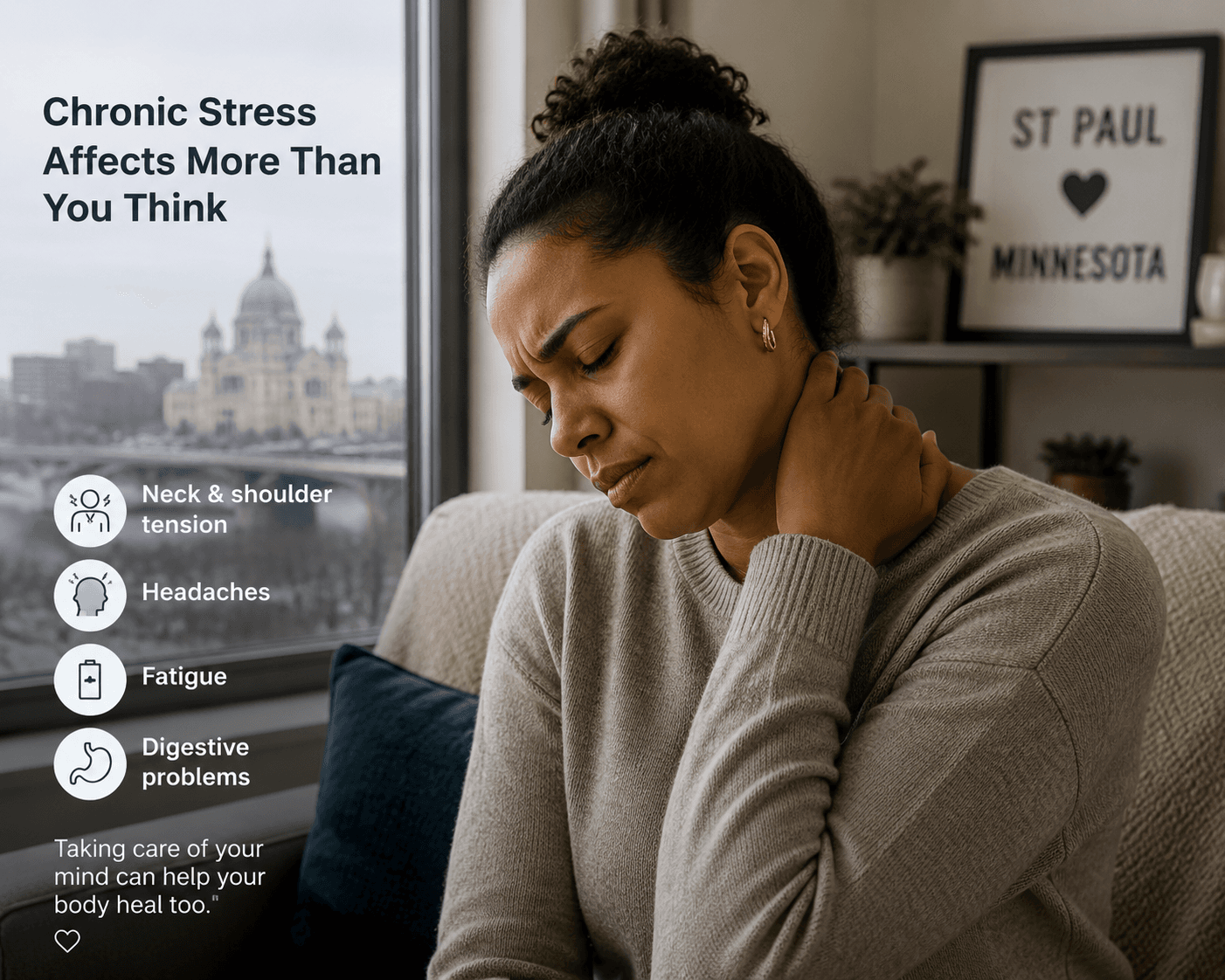
• Chronic muscle tension, particularly in the neck, shoulders, and jaw
• Disrupted sleep, which in turn worsens the body's ability to recover from daily stress
• Hormonal imbalances that can affect weight, energy, and mood regulation
Why This Matters Particularly in St Paul
Residents across St Paul and the East Metro face many of the same stress contributors common throughout the Twin Cities, demanding jobs, long commutes, and, during winter months, the added physical toll of cold weather and reduced daylight, which itself is a physical stressor on the body. For people already managing chronic stress, Minnesota's winter season can compound the physical burden considerably.
Recognizing the Signs
• Frequent headaches or unexplained muscle pain
• Getting sick more often than usual
• Digestive symptoms that flare during high stress periods
• Persistent fatigue that isn't resolved by sleep
• A sense of being physically wound up or unable to relax, even at rest
What Actually Helps
• Therapy focused on nervous system regulation, using techniques like paced breathing and progressive muscle relaxation to directly counter the body's stress response
• Cognitive behavioral therapy, to address the ongoing stressors and thought patterns keeping the body's alarm system activated
• Coordination with medical providers, since chronic stress related physical symptoms benefit from being addressed on both a physical and psychological level
• Lifestyle and routine adjustments that support the body's ability to recover, including consistent sleep and movement
Frequently Asked Questions
Can stress really cause physical illness?
Yes. Chronic stress is well documented to contribute to cardiovascular issues, weakened immunity, and digestive problems, among other physical effects, through its impact on cortisol and the nervous system.
How do I know if my symptoms are stress related or something else medically?
It's important to rule out other medical causes with a physician first. Many people find that a combination of medical evaluation and stress focused therapy provides the clearest picture and the most effective treatment plan.
Can therapy actually reduce physical symptoms of stress?
Yes. Approaches like cognitive behavioral therapy and nervous system regulation techniques have measurable effects on stress hormones and physical tension, often reducing symptoms like headaches, muscle pain, and sleep disruption.
Related Reading
• Anxiety Symptoms in the Body
• Anxiety and Sleep
If chronic stress has started showing up in your body as much as your mood, that combination deserves direct attention. At Radiant Recovery and Counseling, our therapists across St Paul and the greater Twin Cities, in person and via telehealth, help clients address the physical toll of chronic stress alongside its emotional roots.
Schedule a consultation: 612-429-1662 | info@rrcs.cc | https://www.radiantrecoveryandcounseling.com/book